Property Lines That Actually Contain Livestock
Fence Installation in Lakeland and throughout Polk County for agricultural properties requiring secure boundaries
Florida's combination of sandy soils, seasonal saturation, and high winds creates fence failure patterns that include post heaving, wire sagging, and panel collapse within years of installation when construction shortcuts are taken. Fences on agricultural and ranch properties must contain livestock reliably, withstand animal pressure along fence lines, and remain taut across long spans without constant re-tensioning. 3B Land Management installs fences across residential, agricultural, and ranch properties in Haines City, Lakeland, and throughout Polk County, using post-setting depths and bracing techniques that account for soil conditions and intended use rather than minimal residential standards that fail under working demands.
Fence installation begins with layout to establish straight runs, corner locations, and gate placements that accommodate property contours and access needs. Posts are set in augered holes with depth adjusted for soil type and fence height, using concrete anchoring on corner and gate posts that bear tensioning loads. Wire or panel attachment follows tensioning to remove slack that allows animal breaches and accelerates material fatigue from repeated stress cycles.
Arrange an on-site consultation to review property boundaries, terrain challenges, and fencing options suited to your land use.
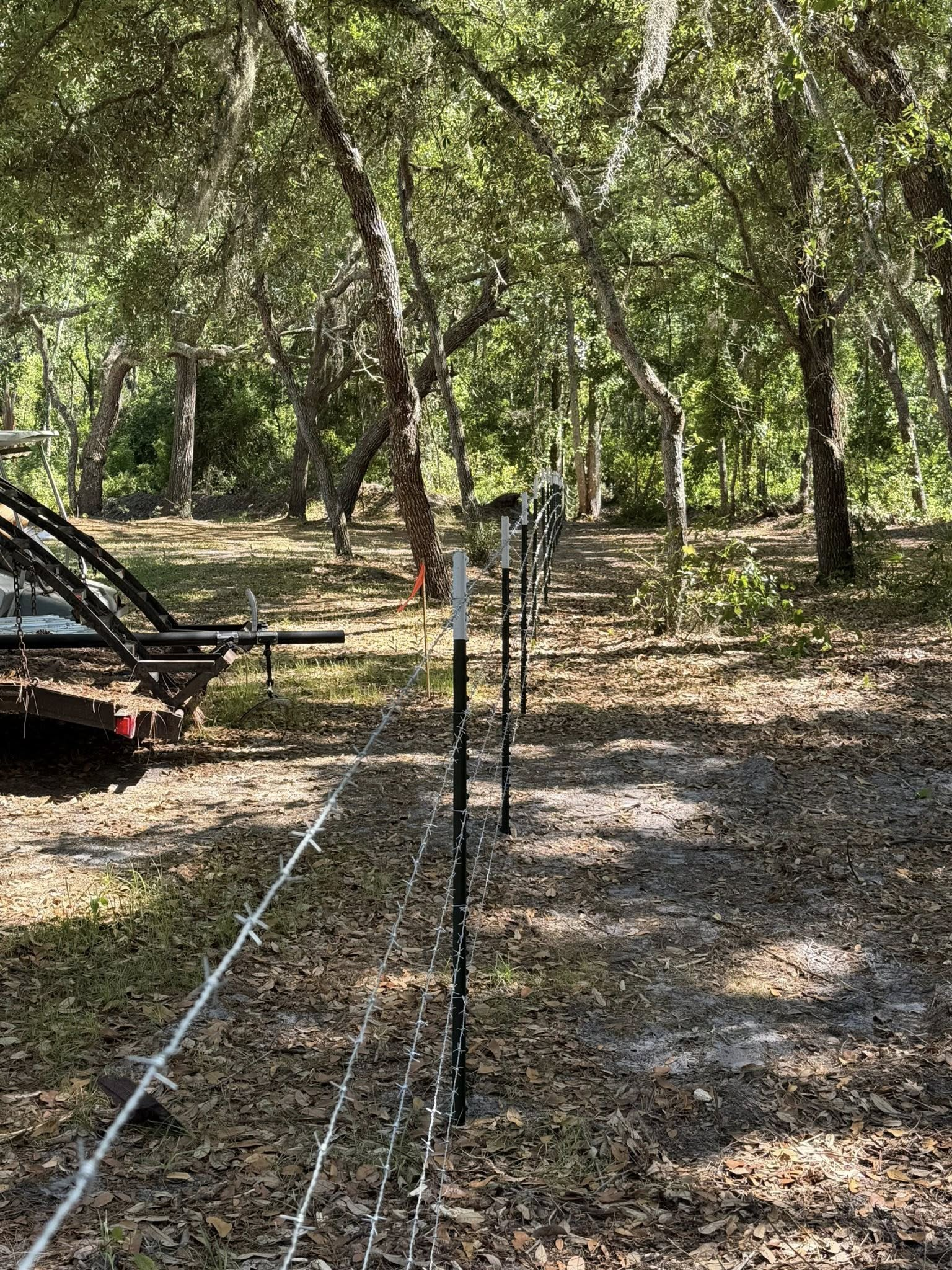
What Fence Installation Actually Accomplishes
Post installation in sandy soil requires deeper setting than clay-based soils to achieve lateral stability, with corner posts receiving angled bracing or concrete footings to resist the pulling force exerted by tensioned wire. Line posts are spaced according to fence type and terrain, with closer intervals on rolling ground to maintain consistent wire height and prevent gaps at low spots where animals push through. Gates are framed with reinforced posts and hung with hardware that supports repeated opening cycles without sagging or binding.
After installation, you'll see defined property boundaries that prevent livestock drift, establish clear separation between pastures or land uses, and eliminate gaps where animals previously moved between properties. Wire fences maintain tension across temperature changes and animal pressure, and panels remain plumb without leaning or buckling at post connections. Properly set posts resist frost heaving during Florida's brief cold periods and remain stable in saturated soil during summer rain cycles, maintaining fence integrity without annual re-setting or brace replacement.
Fence installation establishes the perimeter structure but does not include clearing of dense vegetation along fence lines, removal of existing fencing materials, or grading work to level significant terrain variations. The installation assumes accessible fence line corridors and addresses normal ground contours without extensive earthwork or obstacle removal that falls outside standard fencing scope.
Questions Before Starting Your Project
Fence projects on larger properties involve planning decisions about materials, layout, and long-term durability under specific use conditions.
What post-setting depth works for different fence types?
Standard residential fencing uses posts set 24 inches deep, while agricultural wire fences often require 30 to 36 inches in sandy soil to resist torque from wire tension. Corner and gate posts need even deeper setting or concrete anchoring to handle the load concentration from entire fence sections pulling against those points.
How does fence choice differ for livestock versus property marking?
Livestock fencing requires materials that contain animals under pressure, such as woven wire, high-tensile smooth wire, or closely spaced rails that prevent squeezing through or jumping. Property line fencing without livestock can use lighter materials focused on visibility and boundary definition rather than containment strength.
What spacing between posts prevents sagging over time?
Post intervals depend on fence height and material, with wire fences typically using eight to twelve-foot spacing on level ground and tighter intervals on slopes. Panel fences follow manufacturer specifications, usually six to eight feet, to support panel weight without bowing between attachment points.
Why do some corners require bracing?
Corner posts anchor the tension from two fence directions and experience constant pulling force that would rotate or lean unbraced posts over time. Diagonal bracing or H-braces transfer that load into the ground through additional posts, keeping corner posts vertical and maintaining wire tension across connected fence sections in Polk County's loose soils.
What determines gate placement and size?
Gates are positioned based on equipment access needs, pasture rotation patterns, and property entry points. Width accommodates the largest vehicle or implement that will pass through regularly, with agricultural gates often requiring 12 to 16-foot openings compared to four-foot widths sufficient for pedestrian or utility access.
3B Land Management provides free estimates following site review of property lines, terrain, and fencing objectives. Reach out to discuss fence types, post requirements, and installation approaches that match your property's specific size and use demands across residential or agricultural acreage.