Stumps Removed Without Yard Destruction
Stump Grinding in Lakeland and throughout Polk County for leftover stumps blocking landscaping and attracting pests
Tree stumps left after removal create obstacles for mowing, trip hazards in high-traffic areas, and anchor points for fungal colonies that spread to nearby healthy trees. Stumps also send up sucker shoots that require repeated cutting and provide habitat for termites, carpenter ants, and wood-boring beetles. 3B Land Management uses stump grinding equipment in Lakeland, Haines City and throughout Polk County to reduce stumps below grade level, eliminating regrowth potential and allowing the area to be repurposed for turf, planting beds, or hardscaping without the expense and disruption of full stump extraction.
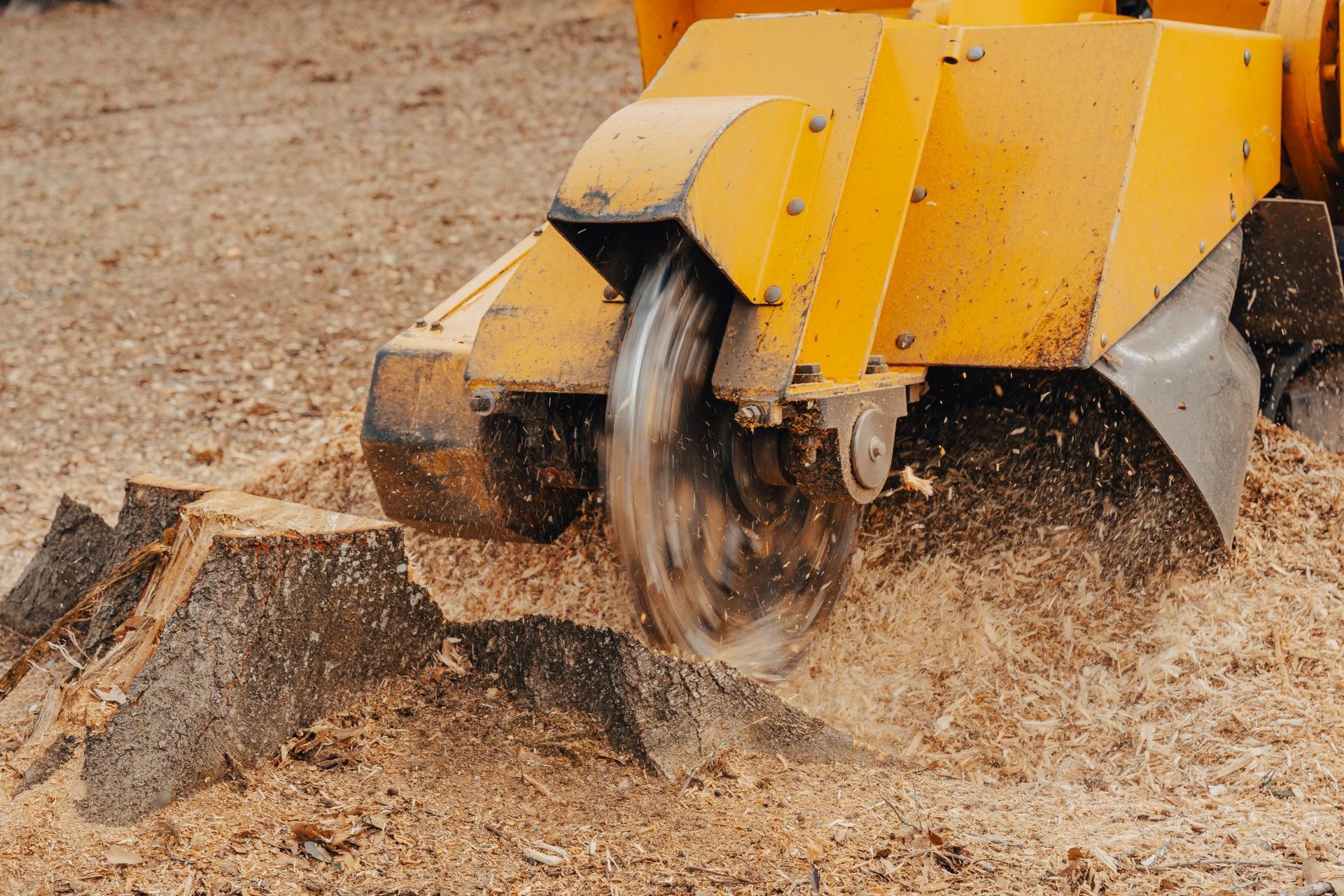
Grinding reduces the stump and surface root structure to wood chips by cutting progressively deeper with a rotating carbide wheel. The process pulverizes wood to several inches below ground level, severing roots that would otherwise sustain regrowth and creating mulch that can be used on-site or removed depending on your landscaping plans. Depth is adjusted based on whether the area will support grass, plantings, or structures.
Arrange a site visit to assess stump size, root spread, and access requirements for grinding equipment.
How Grinding Addresses Leftover Stumps
The grinding wheel reduces stumps incrementally, starting at the top and working downward while moving laterally to address surface roots extending beyond the trunk diameter. Depth typically reaches eight to twelve inches below grade, sufficient to support sod or mulch cover without interference. The resulting wood chips are finer than hand-chopped mulch and break down faster, though they can be mixed with soil amendments if immediate planting is planned.
Once grinding is complete, the depression left by the stump is filled with chips, and you'll notice the area is level with surrounding grade after settling. Turf establishes over the site within one growing season, and planting beds can be developed immediately with the addition of topsoil over the chip layer. The elimination of the stump removes the food source for wood-destroying insects and stops the spread of root rot fungi that colonize decaying stumps and migrate through soil contact to adjacent trees.
Grinding does not remove the entire root system, which decomposes naturally underground over several years. Large lateral roots beyond the grinding area may require additional cutting if they interfere with construction or hardscaping, though most residential applications involve only the stump and immediate root flare.
Answers to Frequent Service Questions
Stump grinding decisions often involve questions about timing, site conditions, and what happens to the material removed during the process.
What happens to the wood chips produced during grinding?
Chips are typically left on-site to fill the depression and provide organic material that enriches soil as it decomposes. If you prefer removal for aesthetic reasons or plan immediate construction, chips can be hauled away, though this adds to project cost based on volume and disposal requirements.
How close to structures or fences can grinding occur?
Equipment access determines proximity limits, with most grinders requiring a clearance path of at least 36 inches. Stumps within inches of foundations, retaining walls, or fence posts may require hand work or alternative removal methods to avoid collateral damage from the grinding wheel's lateral reach.
Why is grinding preferred over digging out stumps?
Grinding eliminates the stump without disturbing surrounding soil, preserving existing landscaping and avoiding the large excavation required to remove root balls. Digging also risks damaging underground utilities, irrigation lines, and nearby tree roots, while grinding stays at or above the service line depth in most residential settings.
When should grinding be scheduled after tree removal?
Grinding can occur immediately after cutting or be delayed if you're planning related landscape work. In Haines City's humid climate, stumps left unground for extended periods attract fungi and insects rapidly, so scheduling within a few weeks of removal prevents pest colonization and simplifies the grinding process before decay softens the outer wood.
What determines grinding depth?
Intended use of the area dictates depth, with turf requiring only four to six inches of clearance while structures or paved surfaces need deeper grinding to prevent settling. The grinder can reach depths of twelve inches or more depending on equipment and stump hardness.
3B Land Management offers free estimates that specify grinding depth, chip handling, and site access considerations. Contact us to review stump locations and determine the most efficient approach for clearing stumps and reclaiming usable yard space across your property.