Hazardous Trees Removed Without Damaging Your Property
Tree Removal in Lakeland and across Polk County for residential and commercial properties dealing with hazardous, damaged, or unwanted trees threatening structures and landscaping
Trees leaning toward buildings after storm damage, root systems lifting driveways and sidewalks, and dead limbs hanging over roofs all create liability and safety concerns that worsen the longer removal is delayed. Safe and efficient tree removal handles hazardous, damaged, or unwanted trees on residential and commercial properties while protecting surrounding structures and landscaping during the process. 3B Land Management provides tree removal services in Lakeland, Haines City, and throughout Polk County with experience handling Florida tree types and conditions, including cleanup and debris removal after the job is finished.
Tree removal involves more than cutting down the trunk—it requires assessing lean direction, evaluating nearby obstacles, rigging sections for controlled lowering when space is limited, and grinding stumps below grade so the area can be replanted or built over. Florida's mix of oak, pine, palm, and invasive species each present different removal challenges based on wood density, root structure, and how the tree responds to cutting, with storm-damaged trees requiring extra caution due to internal splits and unpredictable weight distribution.
Schedule a free estimate to assess tree condition, removal approach, and debris handling for your property.
What Happens During Professional Tree Removal
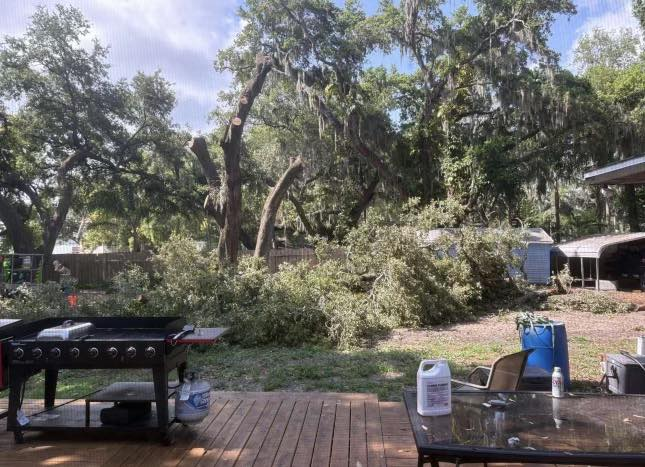
Removal begins with evaluating the tree's lean, checking for internal decay or structural damage, and planning the safest direction for felling or sectioning based on nearby structures, power lines, and landscaping that must be protected. Trees with adequate clearance are felled in one cut, while trees close to buildings or in tight spaces are removed in sections using ropes and rigging to control each piece as it's lowered to the ground. Stumps are ground to several inches below soil level, leaving wood chips that can be removed or spread as mulch depending on your plans for the area.
After removal is complete, you'll notice the hazard is gone, surrounding landscaping and structures remain undamaged, and the area is cleared of debris so it's ready for replanting, construction, or lawn restoration. The process also eliminates root systems that were causing foundation issues, lifting pavement, or interfering with underground utilities, preventing those problems from continuing.
Tree removal includes cutting, sectioning as needed for safety, stump grinding, and complete debris cleanup, but does not include root removal beyond stump grinding, soil replacement, or landscape restoration unless arranged separately. Removal decisions should account for tree location, health, and whether the tree poses immediate risks or will create problems as it continues to grow.
Questions Before Starting Your Project
Tree removal projects depend on tree size, species, location relative to structures, and site access for equipment.
What makes a tree hazardous?
Trees are considered hazardous when they lean toward structures, show signs of internal rot or disease, have large dead limbs that could fall, or have root systems undermining foundations, driveways, or utility lines.
How are trees removed near buildings safely?
Trees close to structures are removed in sections starting from the top, with each piece rigged using ropes and lowered in a controlled manner to prevent damage to roofs, siding, landscaping, or adjacent property.
What happens to the wood and debris after removal?
Wood and debris are chipped on-site and hauled away, or larger logs can be cut into manageable sections and left on the property if you plan to use them for firewood or other purposes.
How deep are stumps ground during removal?
Stumps are typically ground six to eight inches below soil level so grass can be planted over the area or the space can be used for landscaping or construction without the stump interfering with future work.
What Florida tree types require special removal techniques?
Palm trees have fibrous trunks that don't respond to traditional felling cuts and must be sectioned differently, while oak and pine trees develop heavy canopies and deep roots that affect rigging and stump grinding approaches used during removal.
3B Land Management removes trees with planning and precision to keep your property safe and undamaged. Contact us for a detailed estimate, project timeline, and answers to questions specific to the trees on your property.