Driveways Built for Florida's Weather Cycles
Small Concrete Driveways in Lakeland and throughout Polk County for residential properties needing durable vehicle surfaces
Residential driveways in Florida endure temperature swings, seasonal flooding, and soil movement that cause cracking, settling, and surface degradation in poorly installed concrete. A driveway that fails prematurely shows joint separation, low-spot pooling, and edge crumbling where vehicle weight concentrates on inadequate base material. 3B Land Management installs small concrete driveways in Lakeland, and Haines City with proper site preparation and grading to manage water movement and soil stability, creating surfaces that support daily vehicle traffic without requiring frequent patching or replacement.
Installation begins with excavation to remove unstable topsoil, followed by compacted aggregate base that distributes load and prevents settling. The concrete is poured to a thickness that accommodates typical residential vehicle weights, with control joints positioned to direct cracking along planned lines rather than random fractures that compromise structural integrity. Grading slopes the surface to direct rainwater away from structures and prevent standing water that accelerates surface wear.
Request a detailed estimate based on driveway dimensions, soil conditions, and drainage requirements for your property.
What Changes After Installation Completes
Site preparation includes removal of organic material and loose soil to a depth that reaches stable subgrade, typically six to eight inches for standard residential driveways. Aggregate base is compacted in layers to achieve density that resists compression under vehicle load, and edge forms are set to establish finished grade and width. The concrete mix is specified for outdoor exposure and includes air entrainment to resist freeze-thaw damage during Florida's occasional cold snaps.
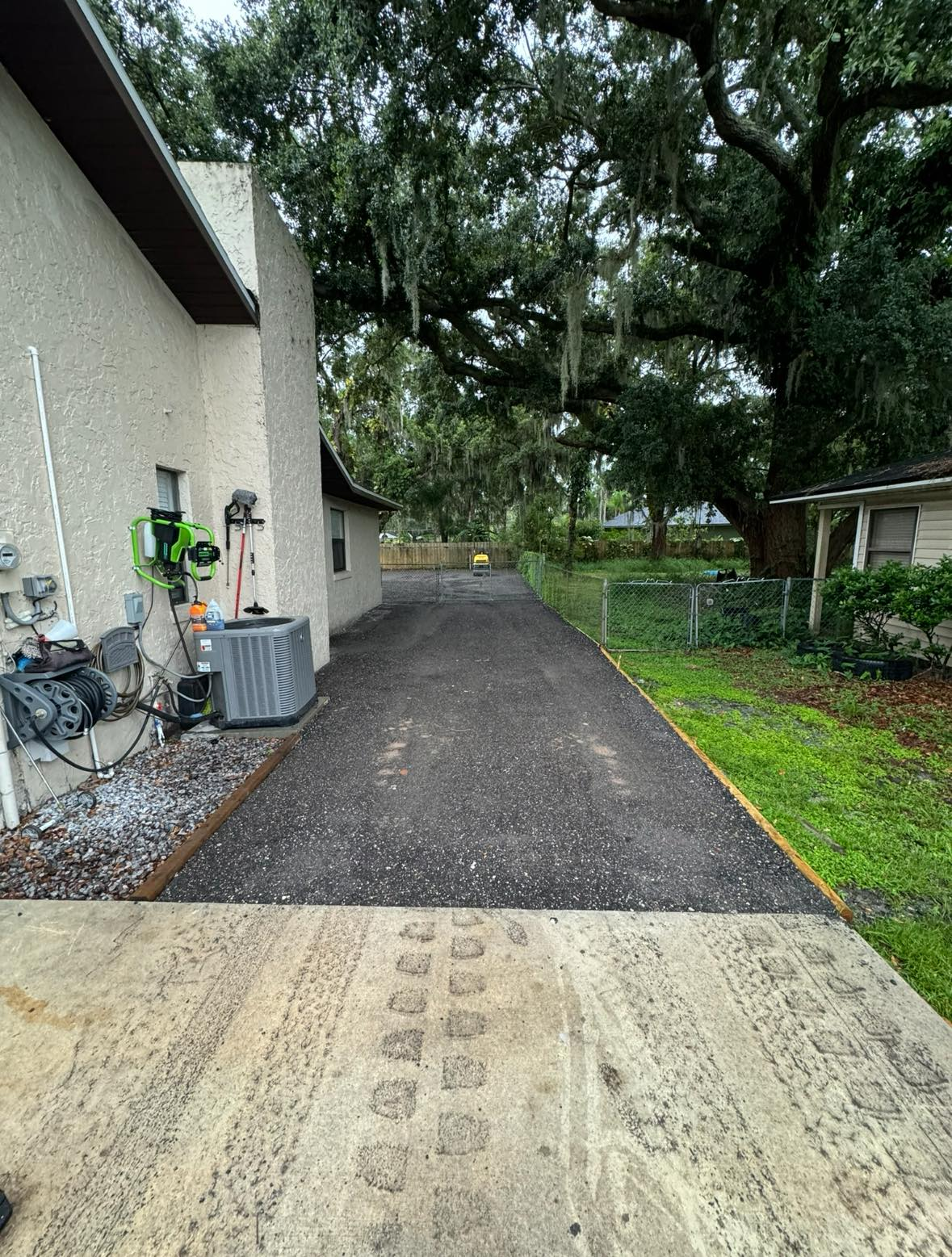
After curing, your driveway provides a firm, level surface that drains quickly following rain and supports vehicle traffic without rutting or surface damage. The control joints create planned weak points that accommodate concrete's natural expansion and contraction, keeping cracks hairline-sized and contained rather than allowing uncontrolled fractures that widen under load. Proper slope prevents water accumulation that softens base material and creates voids beneath the slab, extending the driveway's functional lifespan before resurfacing becomes necessary.
The installation includes site grading and base compaction but does not extend to decorative finishes, stamped patterns, or colored concrete that require additional materials and specialized finishing techniques. The focus remains on creating a durable, functional surface designed for longevity under typical residential use rather than architectural enhancement.
Common Questions About This Service
Concrete driveway installation involves decisions about preparation, materials, and long-term performance expectations based on local conditions.
How thick does the concrete need to be for regular vehicle use?
Residential driveways are typically poured four inches thick, which handles standard passenger vehicles and light trucks without cracking under load. Heavier vehicles or equipment may require increased thickness and reinforcement, though most single-family applications fall within the standard specification.
What soil conditions affect installation in Polk County?
Sandy soils common in Polk County drain well but require sufficient aggregate base to prevent sinking where concentrated weight occurs. Clay soils hold moisture and expand during wet periods, necessitating deeper excavation and thicker base layers to isolate the concrete from soil movement that causes slab cracking.
How long before the driveway can support vehicle traffic?
Concrete reaches handling strength within seven days under normal conditions, though full cure requiring 28 days provides maximum durability. Light foot traffic is safe after 24 hours, but vehicle weight should be avoided during the initial cure period to prevent surface damage and cracking from premature loading.
Why do control joints appear in the finished driveway?
Joints are cut or formed at intervals to create intentional weak points where concrete cracks due to shrinkage and temperature changes. Controlling crack location keeps fractures narrow and aligned, preventing random cracking that creates uneven surfaces and allows water infiltration that undermines the base.
What maintenance does a concrete driveway require?
Periodic sealing protects the surface from water absorption and staining, though unsealed concrete performs adequately with occasional cleaning to remove organic growth. Joint caulking prevents debris accumulation and water penetration, and addressing small cracks early prevents expansion that leads to slab separation and structural failure.
Free estimates from 3B Land Management include site assessment, material specifications, and grading recommendations tailored to your property's drainage patterns and soil type. Schedule a consultation to review driveway layout and preparation steps that support long-term performance in Florida weather conditions.